 techandtab
The modern software development landscape demands computing power that can seamlessly handle everything from lightweight scripting to intensive...
3 Things To Consider Before Bringing A Laptop On Your Camping Trip

We may receive a commission on purchases made from links.
Statista estimates that over 50 million Americans six and older went camping in 2022 and 2023, which represents an increase compared to the 2010s. One could speculate that the rise of remote working has made it easier to explore more creative travel options, but whatever is driving this trend, it’s safe to say that camping is becoming an increasingly popular way to unplug and reconnect with nature.
Thanks to modern technology, you don’t need to go completely off the grid when you go camping. In fact, bringing a laptop on a camping trip doesn’t sound like a bad idea at all — you can catch up on work when you have some downtime, stay connected if anything urgent comes up, or even enjoy a movie before bed. But any experienced camper would tell you that electronics and the wilderness don’t always mix well. With that in mind, here are three things to consider before bringing a laptop on your next camping trip.
Laptop weight and size

The first thing you need to consider is the size and weight of your laptop. If you own a large laptop, it will naturally take up a lot of space in your bag. Whether you’re hiking, setting up a campsite, or just carrying a lot of camping gear, a few pounds can make a real difference in terms of comfort and convenience.
Now you don’t have to literally measure and weigh your laptop to see if it’s camping-friendly, as the screen size is usually a good indicator of its overall dimensions and weight. Laptops with screen sizes ranging from 11 to 12 inches are considered ultraportable. Laptops with screens in the 13 to 14-inch range are usually fairly thin and light as well. Carrying around a standard-sized laptop with a 15-inch screen might not be too uncomfortable, but anything above 16 inches is typically considered a desktop replacement laptop. If you prefer to think of it in terms of weight, any laptop that weighs 5 pounds or more is better suited for stationary use.
Additionally, large and powerful laptops with big screens tend to have shorter battery lives, as they need more power to operate than smaller, more portable devices, which is another important factor to keep in mind (more on that below). In other words, if you’re an avid camper or think you might become one, thin and sleek laptops, like the Dell XPS 13 or Microsoft Surface Pro 9, are a much better option than heavy high-performance machines.
Environment and weather conditions

Laptops are generally designed to operate within a temperature range of 50 to 95 degrees Fahrenheit. This doesn’t mean your laptop would immediately break down if exposed to temperatures outside this range, but prolonged exposure could cause real damage to the hardware components.
While a laptop backpack, insulated case, or bag can help protect your device from elements and extreme weather conditions, you still need to be mindful of where and how you store it. For example, leaving your laptop in a vehicle for long periods of time can result in damage, even if it is stored in a well-padded bag. During summer, it might be a good idea to use a cooling pad, which is placed under a laptop to improve airflow and protect the device from overheating.
The last thing you want is for your laptop to come into contact with snow or water, so that’s an even bigger concern. Knowing your laptop’s IP (Ingress Protection) rating can be of big help here, as that is an international standard that defines the level of protection from water and debris. For example, if a laptop has an IP4 rating, it is well-protected against water splashing. If it has an IP7 rating, it can be submerged in water for up to 30 minutes. As a general rule of thumb, if your laptop is not military-grade, it should not come into contact with water. Consider investing in a waterproof sleeve or case — like this FINPAC hard laptop sleeve that is going for $25.99 on Amazon.
Power supply and battery life
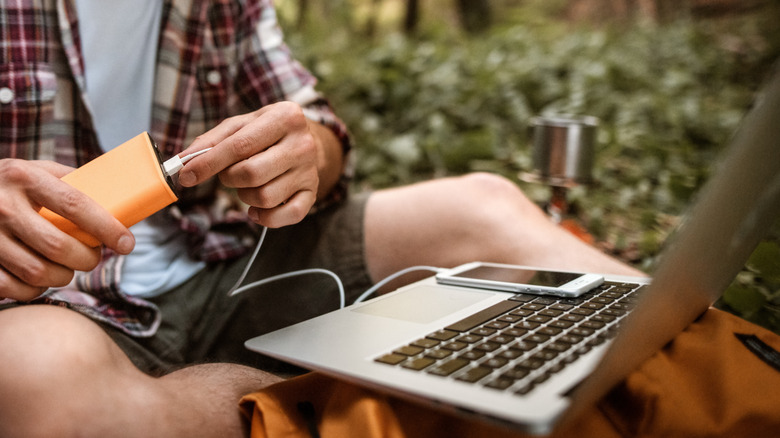
Some laptop batteries can last up to 27 hours, while others may only provide a few hours of usage. Generally speaking, how long your battery lasts depends on various factors, including display brightness, the type of applications you’re running, the number of background apps, external peripherals, and so on. Temperature also plays a role, with the battery draining faster in extreme heat or cold.
If you want to bring a laptop on your next camping trip, battery life is definitely something you should pay attention to. If you’re going on a short camping trip and own an M3 MacBook Pro, for example, you might not need to bring a power bank or charger, as the laptop’s battery can last up to 22 hours. In most cases though, you will need to plan for additional power sources.
The good news is that you have several options to choose from — you could invest in a small generator, a high-capacity power bank, or a portable solar panel.
Source: http://www.slashgear.com/1716882/bring-laptop-camping-things-consider-before/
You may also like

